In the second-driest state in the country, water questions are fair questions. The answer here is genuinely satisfying: if your current toilet predates the mid-1990s, a modern smart toilet is one of the rare upgrades that pampers you and shrinks a utility line item at the same time.
The Flush Math Across Generations
Toilets from the 1980s and earlier commonly use 3.5 to 7 gallons per flush. Federal standards capped new toilets at 1.6 gallons in the 1990s, and today's high-efficiency dual-flush units, including the smart toilets we install, run figures like 1.0 gallons full flush and 0.8 light flush. Against an older toilet, a busy household can save thousands of gallons a year from this one fixture.
Why Dual Flush Plus Sensors Beats A Handle
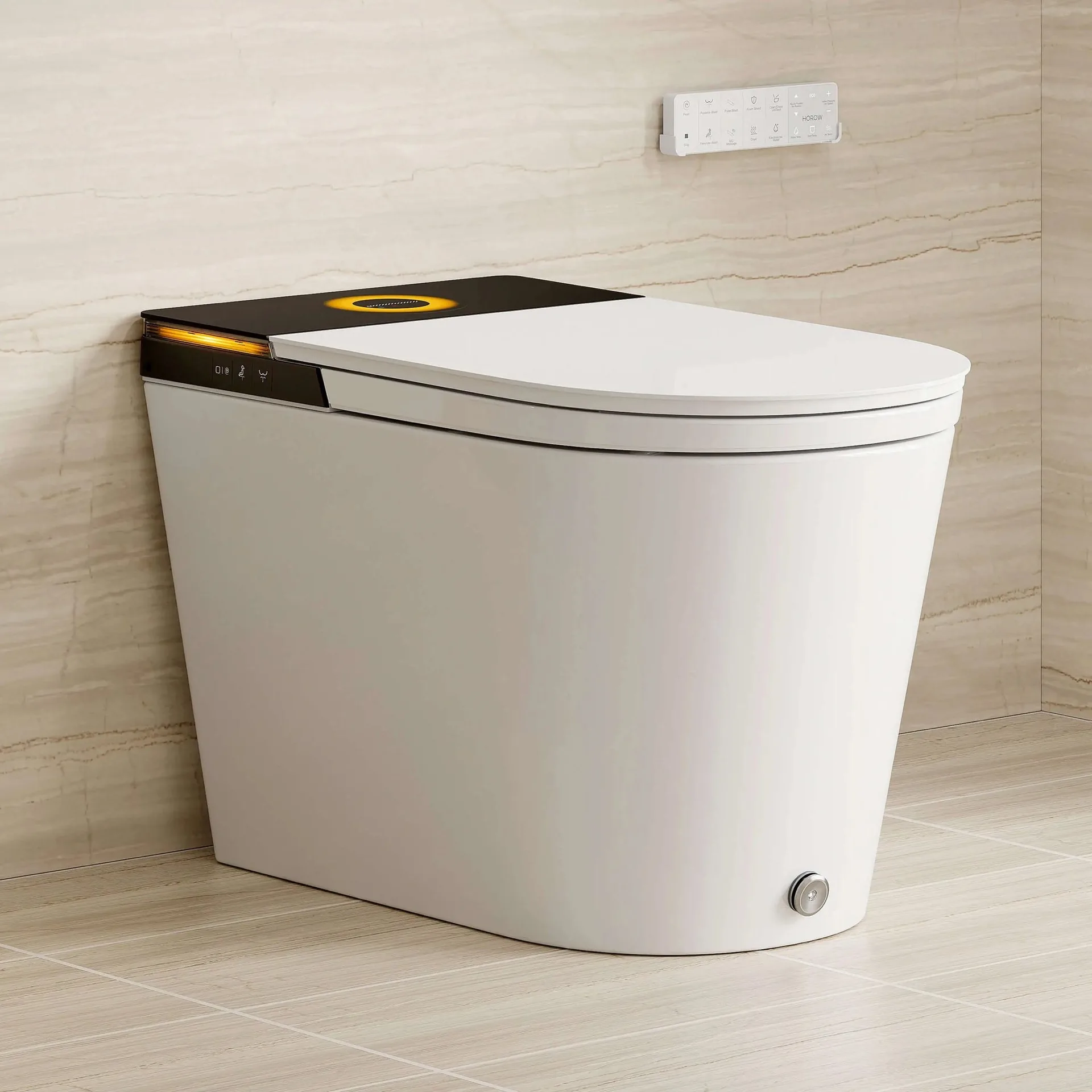
Dual flush only saves water when the right button gets pressed. Smart toilets remove the human error: automatic flush selection matches water volume to what is actually needed, every time, without anyone thinking about it. Pump-assisted models like the Horrow X70 also clear the bowl decisively on the first flush, which quietly eliminates the double-flush habit that wrecks efficiency numbers.
What It Means On A Utah Bill
Toilets are among the largest indoor water users in a typical home. Cutting per-flush volume by half or more moves a real number, especially for larger households on tiered water rates. It will not fund a ski pass, but it defrays the upgrade year after year while conservation-minded Utah gets a little help.
Quick Answers
Do low-flow flushes actually clear the bowl?
Modern engineering solved this. Pressure-assisted and pump-driven designs clear more decisively at 1.0 gallons than 1990s toilets did at 1.6. The double-flush era is over.